December 2025 Edition — COA BulletinProfessional Growth
Covering leadership programs, professional advancement, and career development. Explore actionable tools and programs to elevate your skills and impact as a healthcare professional.
Leading with Purpose: A Conversation with Dr. Marcia Clark on Education, Innovation, and Well-being in Orthopaedics
Editor’s Note:
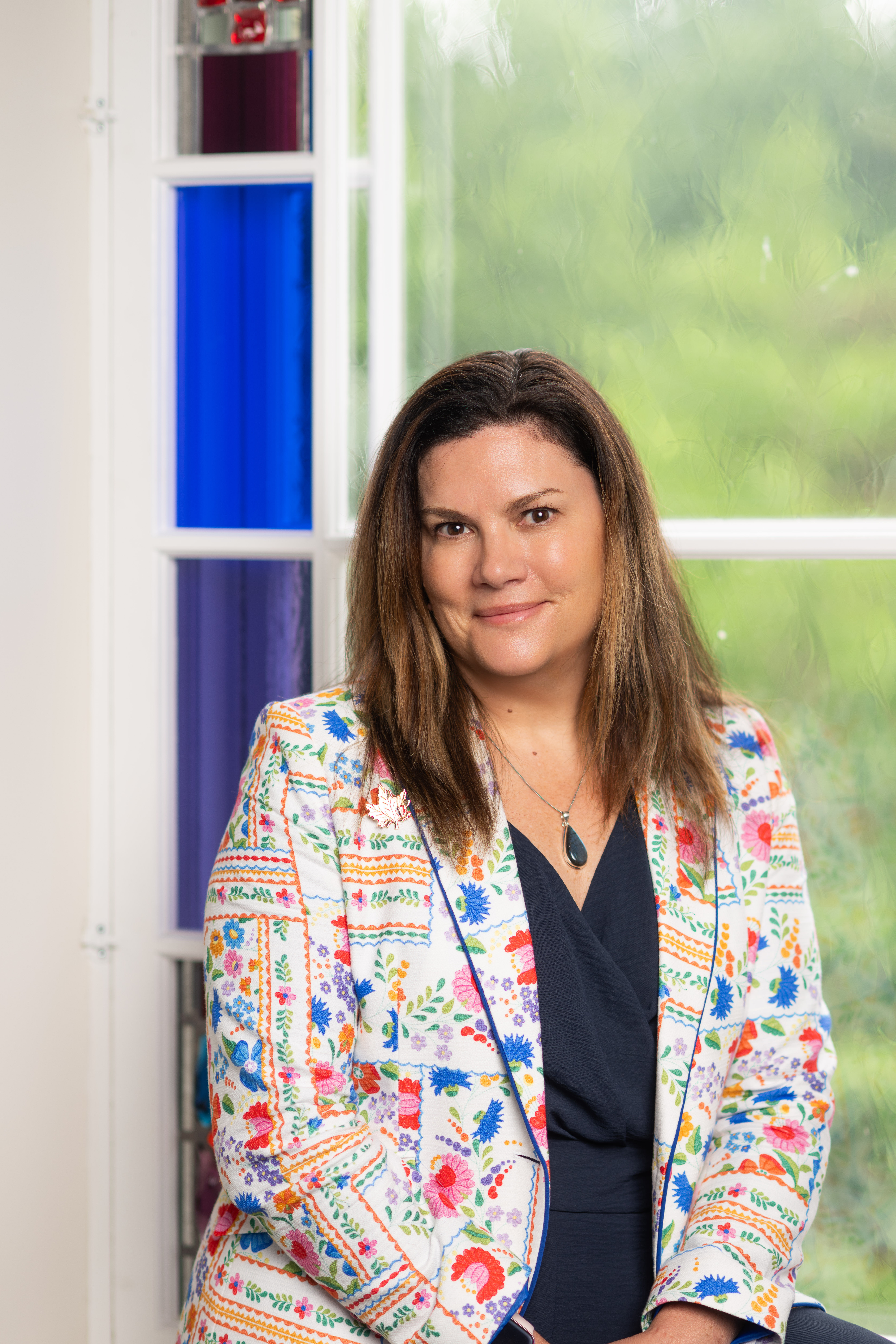
We sat down with Dr. Marcia Clark, President of the Royal College of Physicians and Surgeons of Canada and COA Board member, to explore the evolving landscape of orthopaedic education and the broader responsibilities of medical educators in today’s healthcare system.
Dr. Clark shares her insights on the urgent priorities facing orthopaedic surgeons—from health workforce sustainability to planetary health—and the critical role educators play in shaping resilient, forward-thinking care systems. She highlights how the Royal College is embedding these values into foundational frameworks like CanMEDS, and discusses the importance of coaching, AI literacy, and digital interoperability in modern medical education.
Whether you’re a seasoned educator, a practicing surgeon, or a learner, this conversation offers insights on building a more sustainable and inclusive medical profession. – Ed
Q: As President of the Royal College and an orthopaedic surgeon, what do you see as the most pressing educational priority for orthopaedic surgeons today, and how can educators help address them?
A: Both the Royal College and the COA have identified health human resources (HHR) and workforce well-being as well as planetary health, as critical priorities among specialists and educators. The biggest challenge is keeping our healthcare workforce strong and supported. As educators and orthopaedic surgeons, we play a dual role as stewards of a sustainable system and as advocates for the health of populations, including systemically marginalized groups who may be more significantly affected by climate change. COA members and educators can look to the Royal College for guidance on what we are doing to meet these needs.
The Royal Collegeis embedding planetary health principles into foundational frameworks, such as the updated CanMEDS Framework and accreditation standards, ensuring the competencies required to train the next generation of specialists reflect the necessary skills to meet current demands within the evolving medical landscape. We also know that exhaustion, attrition and licensing challenges are eroding the depth and strength of Canada’s healthcare workforce, which affects access to high-quality, person-centered and sustainable care. These realities cannot continue if we expect to restore joy in the care of patients and communities. With the support of Health Canada, the Royal College is working to build Canada’s Health Workforce Well-being Plan. This plan brings together healthcare leaders and partners to identify, develop and prioritize solutions to the well-being crisis, and ensure people working in healthcare across Canada can thrive in their roles while providing high-quality patient care. As Royal College members, we must actively share our experiences and partner with the Royal College to help implement change.
Q: In your experience, what makes an effective educator in orthopaedics, and how can organizations such as the COA better support faculty in developing those skills?
A: For me, great educators are great coaches. Coaching—whether in the moment or over time—isn’t just a teaching method; it’s a key part of workplace-based assessment. It helps learners grow and gives them confidence. If you’re curious about coaching or want to sharpen your skills, check out the Royal College’s learning platform, My Learning. There’s an entire channel dedicated to coaching resources, plus the Peer Coaching in Practice program, which offers tools and techniques for peer coaching in healthcare. You can learn at your own pace and even earn MOC credits while you do it.
Q: What current initiatives from the Royal College do you see as most relevant to orthopaedic surgeons’ learning and practice, and how can educators engage with them meaningfully?
A: I’m really excited about their new learning platform, My Learning. It’s packed with resources on topics like Indigenous health, planetary health, physician well-being, and faculty development. One of my favorites is the Intro to Sustainable Healthcare Systems module, developed with CASCADES. It explores the link between climate change, health, and health systems—and gets you thinking about how to bring sustainability into your own practice.
Another area that’s becoming essential is AI literacy. Artificial intelligence is already shaping healthcare—from diagnostic imaging to surgical planning—and it’s changing how we teach and learn. The Royal College’s AI Task Force has outlined 12 key recommendations to help us prepare, including embedding AI into training, supporting faculty development, and addressing ethical and legal considerations. If you haven’t yet, check out the AI Task Force report – it’s a great starting point. We also need to think about digital interoperability. Without connected systems, AI can’t reach its full potential. The Royal College is working with partners through the Digital Health Interoperability Task Force to break down barriers and make sure health data flows securely and seamlessly. This matters for patient safety, clinician well-being, and innovation. For orthopaedics, AI is already here: adaptive learning platforms, surgical simulation with haptic feedback, and predictive analytics are improving education and patient care. As educators (and learners ourselves), we need to learn and guide each other on responsible AI use—understanding its benefits, limitations, and ethical implications—while exploring how these innovations can enhance our teaching and practice.
At the Royal College (your organization), we are always open to hearing from our members in specialty medicine. Our work is always evolving, and your voice matters. Fill out surveys, join focus groups, or consider a committee role. Let’s keep the conversation going.
How can we help you with your learning and practice? How can we strengthen the work that we do together as a community of specialists? The Royal College has a unique role as a connector—bringing all specialties to the table. Your Royal College is also deeply connected by its contributors – over 3000 of them! I see this in our exam boards, accreditors, and specialty committees. We’re so grateful to everyone who contributes—whether you’re teaching locally, advocating, or volunteering with the Royal College.
Ortho Insider Podcast– Season 3, Episode 4 – Dr. Marcia Clark
The Power of Learning Objectives in CME: Getting Them Right
 Chelsea Patriquin
Director, Strategic Initiatives, Canadian Orthopaedic Association
Contributor, COA Bulletin
Rebecca Constant
Manager, Education and Professional Development, Canadian Orthopaedic Association
Contributor, COA Bulletin
Among the many components of a successful accredited educational session, learning objectives often pose the greatest challenge – and yet, they’re one of the most critical elements. Those dreaded learning objectives are regularly seen as burdensome, tiresome sentences that predict what a learner will get out of the talk with a seemingly crystal ball, before speakers even have the chance to get their slide deck together.
Learning objectives are one of the most important parts of the content development. Objectives are the backbone that can make or break a learning experience. They are what set apart what the talk can teach, versus what the learner can do, know or apply. From a CME organizer perspective, they are the second thing an audience member reads, right after the title. They are what can drive a learner to choose your meeting room to be in over another. But most importantly, they have a lot of weight in session evaluations and conference evaluations – as those subjective ratings determine the quality outcomes of Section 1 accredited events.
If the learner was motivated, focused and/or reflective as they respond to evaluations, that will significantly help the organizers determine future topic and speaker selection. The data captured in the evaluation influences future programming. That data is generated by informed audience members, who begin their learning journey with learning objectives.
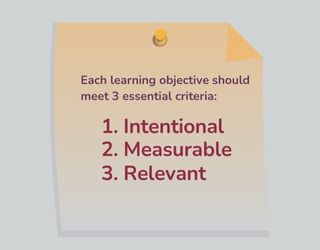
To be considered acceptable, each learning objective should meet three essential criteria: 1. Intentional; 2. Measurable; and 3. Relevant.
- Intentional
Intentional objectives are purpose-driven and aligned with a clearly identified educational need. This need is typically highlighted by the Program Chair or Scientific Planning Committee after reviewing past session evaluations – and ideally, before the session content is developed.Example: By the end of this session, participants will be able to identify four evidence-based strategies for reducing post-operative infection rates in total joint arthroplasty.Learning objectives reflect the session’s plans and align with the overall theme of the session. It’s clearly tied to a clinical outcome and it sets the stage for actionable learning so that learners can look for the four strategies. - Measurable
Another key characteristic of a well-crafted learning objective is measurability. This means using verbs that are specific, observable, and actionable – allowing both the speaker and the learner to assess whether the intended learning has occurred. Avoid vague or abstract terms like “understand” or “appreciate”, which are difficult to evaluate.Example: Participants will be able to: Compare and contrast two different surgical approaches to spinal fusion using outcome data from recent clinical trials. The use of language like “compare and contrast” invites a cognitive skill, critical thinking and data interpretation. It also allows the moderators to evaluate learning success (or not!) through discussion, audience polls and case reviews. - Relevant
Relevant objectives reflect the learner’s scope of practice and address real-world challenges, current standards, or emerging trends. This aspect encourages speakers to consider what matters most to their audience – what they’re facing in clinic, what’s changing in guidelines, and what could improve patient care. Relevance is often the key driver of engagement, helping learners see themselves in the content and connect it to their day-to-day decisions.Example: Participants will be able to apply the updated Canadian guidelines for opioid prescribing in orthopaedic postoperative care.Relevance allows learners to assess their own practice, identify gaps, and implement changes immediately – making the session not just informative, but transformative.
Learning objectives are actually one of the most powerful tools we have to shape meaningful education. While the Royal College’s standards may feel rigid at times, they’re also what keep our educational model world-class. We’re fortunate to be part of a system that demands excellence – because that’s exactly what our learners deserve. As we move forward under the new accreditation cycle, let’s keep leaning into clarity, purpose and relevance. When objectives are done well, they don’t just check a box – they alter the entire learning experience.
Need help refining your objectives? Reach out to the COA CME team – we’re here to support you!
Additional Resources for Educators & Planners:
- For more guidance on crafting acceptable objectives, refer to the COA Learning Objectives Guidelines to understand how to write acceptable objectives
- Use the UWO’s Learning Objective Screening Tool to ensure your verbs are specific, measurable, and appropriate for accreditation standards
- For a comprehensive list of action verbs, refer to Bloom’s Taxonomy of Measurable Verbs
- For additional support with content development, explore the University of Toronto’s CPD Quick Tips and Resources, which offer practical guidance, templates, and tools for effective program planning.
From Scholarship to Leadership: Reflections on a Career-Shaping Experience
 Brodie Ritchie, MD
PGY 5 Resident, University of Calgary
Recipient, 2024 COA Diversity in Leadership Scholarship
Calgary, AB
I am very grateful to have been awarded the Grand Prize from the COA Diversity in Leadership Scholarship, funded by Johnson & Johnson MedTech in 2024. During residency, I attended many conferences in the United States, and along the way I learned about the American College of Surgeons’ Residents as Teachers and Leaders Course, a highly regarded program focused on the essential skills residents need for their lifelong roles as teachers, leaders, and practicing surgeons. As there is no Canadian equivalent, I applied for the COA Diversity in Leadership Scholarship to make attending the course possible. The opportunity to pursue this type of additional training felt especially meaningful as I finish residency and develop a vision for the kind of surgeon and educator I hope to become.
The experience exceeded my expectations. The curriculum emphasized practical frameworks for developing effective teaching, mentoring, and leadership styles, many of which I could immediately apply. The final day of the course remains especially memorable. It was led by Dr. Kyla Terhune, a general surgeon at Vanderbilt with a background in psychology and sports coaching. She challenged us to identify our top three or four priorities in life, reminding us that it is impossible to prioritize everything and do it well. As surgeons progress in their careers, the workload and responsibilities often accumulate until we find ourselves with an untenable list of commitments. Her approach underscored the value of defining a guiding set of principles to ensure that our energy is directed toward what matters most to us—in her case, her loved ones, patients, and commitment to education. This exercise prompted me to examine my own priorities more clearly for the first time in many years. It arrived at an ideal moment, just as I entered my final year of residency, and reminded me how regular reflection can help maintain focus, limit burnout, and support longevity in our careers. It was a grounding reminder that sustainable leadership begins with clarity and intentionality.
Beyond the practical skills and wisdom gained, I also met residents from across the U.S. and Canada, representing a wide range of specialties and training environments. Hearing about their experiences, challenges, and goals broadened my perspective on surgical education and leadership. Statistics from previous cohorts suggest that many of these individuals will eventually assume academic leadership roles, making it a unique opportunity to build relationships with future colleagues I may encounter throughout my career.
The COA Diversity in Leadership Scholarship provided access to training and perspectives I would not otherwise have had during residency. It encouraged me to think more deliberately about the role I hope to play in education and leadership within my field. I am confident it will have a lasting impact on my career trajectory, and I am truly grateful to the COA and Johnson & Johnson MedTech for their support.