
December 2025 Edition — COA BulletinTrainee Highlights
Showcasing training opportunities, testimonials, and mentorship programs. Get inspired by the next generation of orthopaedic leaders and the programs shaping their path.
From Skinny Jeans to Surgical Pearls: Reinventing Education with Flair
Nicholas Smith, MD, FRCSC
2026 Annual Meeting Program Committee Chair
St. John’s, NL
The volume of knowledge required to become an expert in orthopaedic surgery can be daunting. The task is made that much more difficult as evidence changes, new techniques are developed and old ways of thinking require updates. Medical students, residents, fellows, researchers and staff surgeons need to develop tools to help themselves learn and stay up-to-date. The COA Annual Meeting provides an excellent medium for this knowledge maturation, and this year’s meeting in Vancouver was no exception. One session I participated in resonated considerably with me, and stood out as an engaging learning and teaching format.
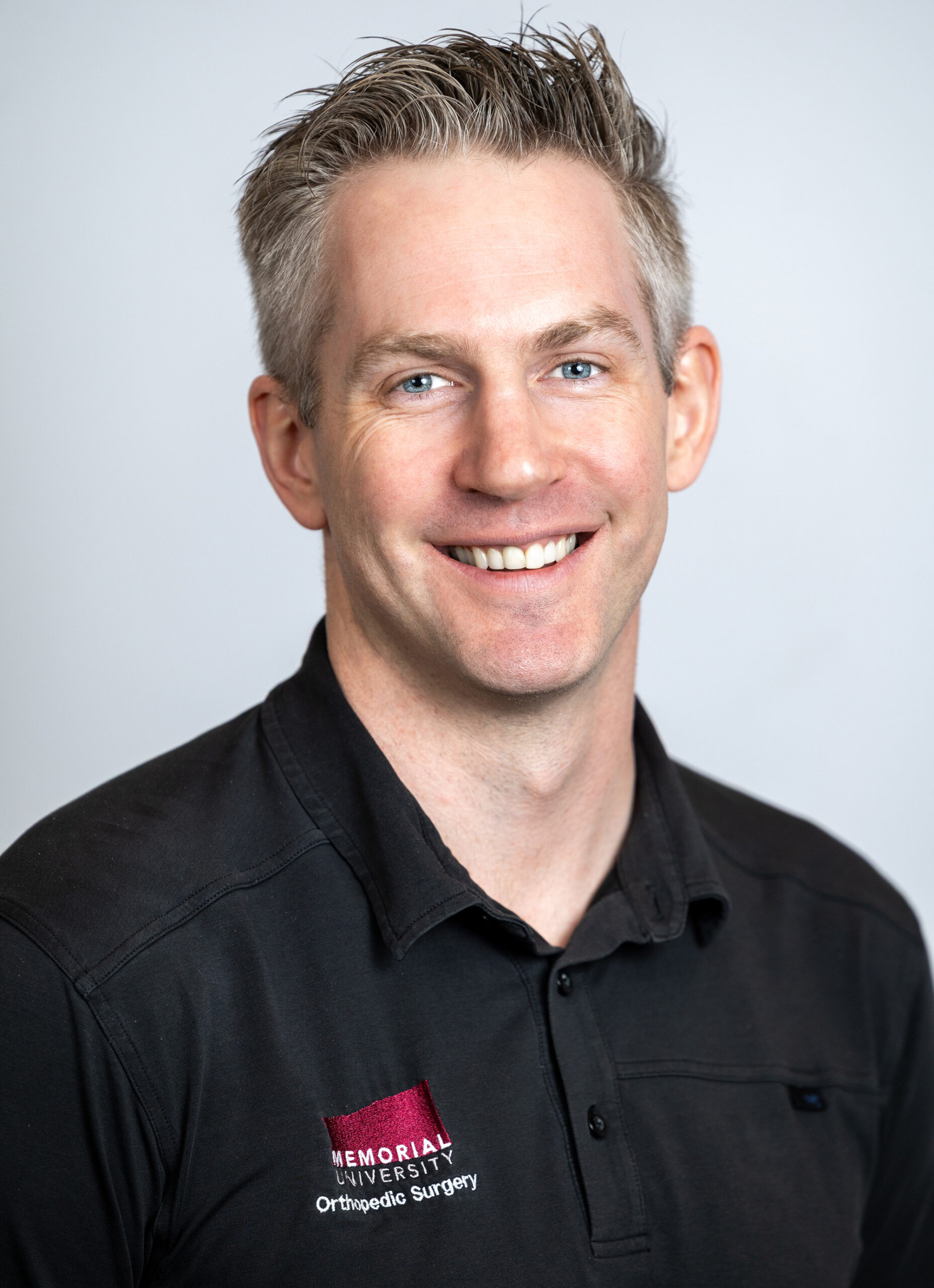
2026 Annual Meeting Program Chair, Dr. Nicholas Smith from Memorial University.
The “Skinny Jeans Symposium”, which it has been become fondly known as, provided an interactive venue for international experts to explore some of the recurring themes and pitfalls that exist within their subspecialties. Much as skinny jeans have come and gone, and come back again…and gone again, within the fashion world, so too have orthopaedic surgeries, techniques and ways of thinking. The panel for this particular session was made up of presidents from the various international orthopaedic associations that make up the Carousel. They were tasked with presenting an aspect of their speciality that, for one reason or another, had fallen out of favour, but made its way back years later. Interspersed within their entertaining didactic talks were interactive panel discussions on the positives and negatives of recurring themes they noticed during their careers.
The session began with Dr. Mark Bowditch, President of the British Orthopaedic Association (BOA), providing an evidence-based list of the various knee surgeries that keep rearing their heads, despite a lack of support from the literature. Patellectomy, plica excision, isolated lateral tenodesis and chondral plugs, just to name a few, were all touched on before he focused on surgery dedicated to isolated medial OA in young patients. Dr. Bowditch concluded with a little pearl for the literary buffs among us, imploring that we send these surgeries to Room 101, a reference to George Orwell’s 1984.
Mr. Khalid Mohammed, President of the New Zealand Orthopaedic Association (NZOA), gave the most entertaining talk of the session. Who knew that skinny jeans were defined as being 13% narrower around the ankle then slim fit? Who knew that open rotator cuff surgery still had its place in the upper extremity handbook? Without both of these pearls, my training as a surgeon had been incomplete. Mr. Mohammed used a thorough review of the literature and evidence from his own practice to support his statement that open rotator cuff surgery was at times faster, less expensive and had equivalent results to arthroscopic surgery. His conclusion: “Don’t throw the baby out with the bath water” was supported with evidence, and “Nobody puts Baby in a corner” was supported with his best Patrick Swayze impression from Dirty Dancing (words cannot describe, watch the video!).
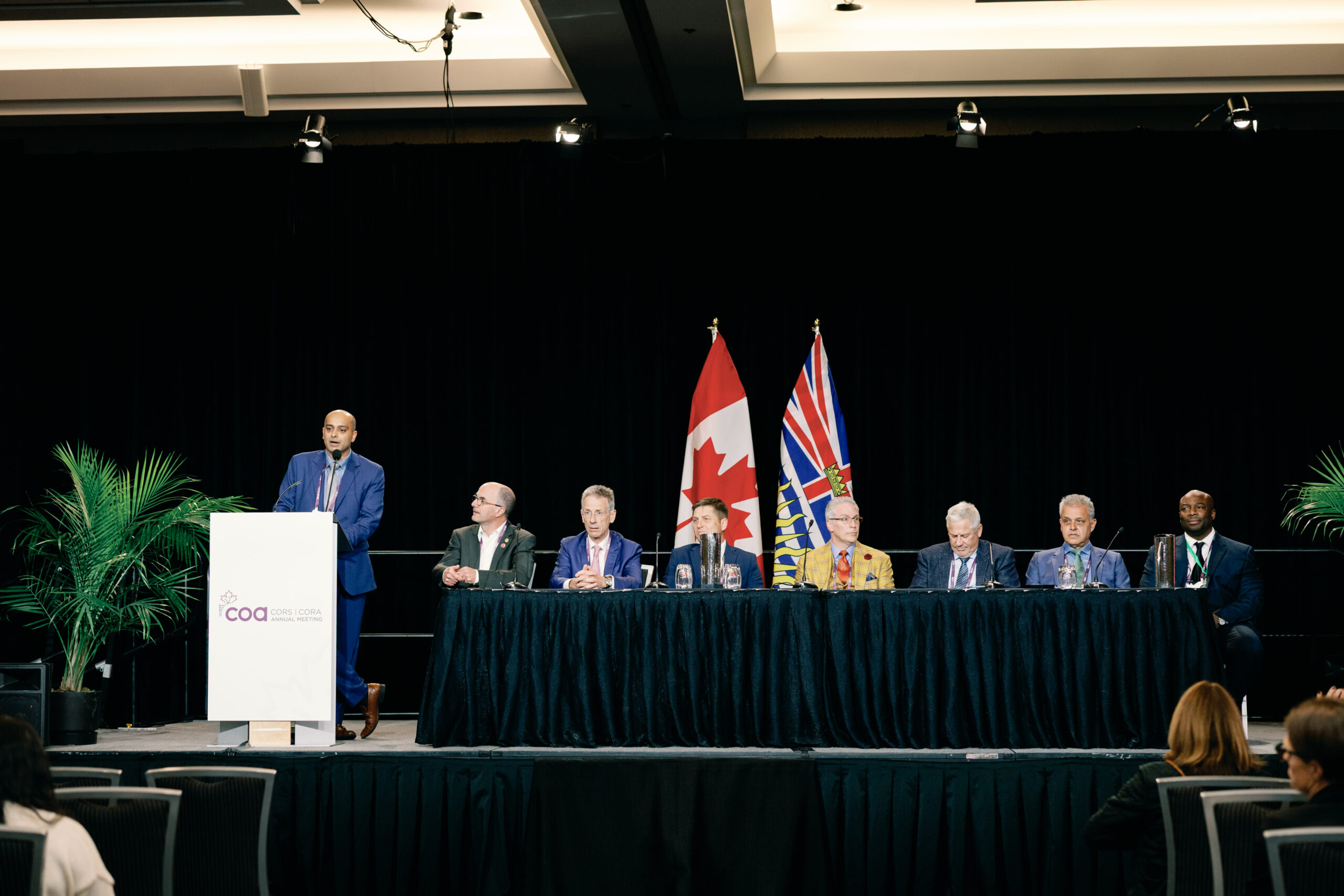
Presidents from the Carousel orthopaedic societies participated as panelists in the ‘Skinny Jeans’ symposium providing pearls and tips across multiple subspecialties based on their practice experiences.
The session was moderated by COA Past President, Dr. Pierre Guy, and 2025 Program Chair, Dr. Parth Lodhia, who guided the panel discussions. The light-hearted and, at times, controversial stances from the panel led to spirited audience participation. This type of environment, in my opinion, is the most enjoyable for fostering critical thinking and lifelong knowledge. It reminded me of my fellowship training, when you would head to a pub or coffee shop to discuss the day’s work, the case of the day, and the controversies of what was performed. The back and forth banter that comes from expert-level discussion creates an unparalleled learning environment. This particular panel session at the COA Annual Meeting in Vancouver did an excellent job in recreating that type of learning experience.
The symposium provided expert knowledge-sharing on specific fields from the knee, to the shoulder to the 1980’s dance moves. But it isn’t the specific learning points that I think made this session so valuable and highly rated. It was fun. Educators and speakers can find novel ways to keep learners engaged through interactive sessions like this one. The program we look forward to offering you next year at the Annual Meeting in St. John’s will include dynamic, interactive, expert-led panels and novel education techniques that will foster growth within our field for decades to come. Look out for the program and more information about the 2026 Annual Meeting being held from June 10-13 in St. John’s, Newfoundland and Labrador.
I look forward to seeing you there!
Symposium: Things That Got Abandoned in My Specialty – Like Skinny Jeans to the Fashion World
Press Pause: Fertility Preservation During Surgical Training
Laura Morrison MD, MSc, FRCSC
Hand Surgery Fellow
Melbourne, Australia
Introduction
Surgical trainees are notorious for deferring personal milestones until “after residency.” Yet some aspects of life — fertility among them — don’t always align with the timeline of training.
In a recent episode of the COA’s Ortho Insider podcast, I shared my experience with freezing my eggs during residency. It’s not something we’re often encouraged to talk about, but it felt important to share — partly because it’s still unfamiliar territory for many of us, and partly because I wish I’d heard someone else talk about it earlier.
Having the Conversation
In surgery, conversations about fertility and family planning can feel a bit out of place. When I first mentioned to my staff that I’d need some time off for medical appointments, everyone was polite and accommodating — but also unsure what to say. It’s not a lack of support so much as a lack of language.
The reality is that fertility is a finite resource, and for residents — especially those in surgical specialties — the biological timeline often collides with professional milestones. Training extends well into our 30s, and it’s easy to focus on exams, fellowships, and job searches while assuming everything else can wait.
Why Residency Was the Right Time
I had been thinking about fertility preservation for several years but kept pushing it to “someday.” As fellowship approached and my schedule filled with new commitments, I realized it was time to stop deferring the decision. The context of the orthopaedic literature also helped shape my thinking: several papers have outlined that female orthopaedic surgeons may have an increased risk of infertility, miscarriage and preterm birth compared to the general population1-3.
For me, going through the process during residency turned out to be the most practical time. From a biological standpoint, younger age is generally associated with better egg quality and quantity, though there’s no one “right” time. It’s a deeply personal decision that depends on your goals, circumstances, comfort level.
From a logistical standpoint, I could plan the cycle around my call schedule and rotations. The process took roughly two weeks from start to finish, and while the financial cost was significant, some of the medication expenses were offset by my resident association’s benefits. The procedure itself was approximately CAD $9,000, with medications adding another $5,000–7,000. It’s worth checking your local resident doctors’ association to see what coverage is available for the medications.
Navigating the Logistics
There’s a certain absurdity to juggling egg freezing with surgical residency — something between highly scientific and quietly comical. Over about 12 days, I had to coordinate early‑morning ultrasounds, daily medications, and precisely-timed hormone injections.
One afternoon, I was scrubbed into a case when my alarm went off for my scheduled injection — which had to be given within a 15‑minute window. I quickly scrubbed out, ran to the bathroom, gave myself the shot, and returned to the OR. It was equal parts ridiculous and empowering, and very much a “resident moment.”
The support I received from colleagues and program leadership made the logistics manageable. My retrieval happened to fall on a weekend, so I didn’t miss clinical time, but I had planned coverage in case it didn’t. Communication and planning were key as things can change by the day based on your hormone levels and ultrasound results.
Reflections and Reassurance
Completing the process brought a sense of satisfaction — not because it changed anything immediately, but because it represented a decision I’d been meaning to make for a long time. I was glad to follow through and take a small, practical step toward preserving my fertility options before starting fellowship. If I could do it again, I would probably have done it earlier as you may end up in a situation where you’d like to do more than one round of egg freezing.
Fertility preservation is one of many practical ways to plan ahead in medicine. It’s not a guarantee and it’s not for everyone, but it should feel acceptable to talk about — or at least to ask about — without awkwardness or judgment.
Quick Facts for Canadian Trainees
| Consideration | Summary |
| Procedural cost | Typically, CAD $8,000–10,000, not covered by provincial health plans. |
| Medication cost | Around CAD $4,000–7,000; resident associations may cover a portion (e.g., up to 90 % in some provinces). |
| Cycle timeline | Roughly 10–14 days, with 3–4 clinic visits and daily timed hormone injections. |
| Program planning | Early communication with rotation supervisors helps minimise disruption. |
| Annual storage fee | Approximately CAD $700–800 per year; varies by clinic and province. |
Closing Thoughts
We plan carefully for exams, fellowships, and job interviews — but rarely for the biological parts of life that don’t run on our schedule. I share this story not as advice, but as reassurance. It’s okay to think about these things in the middle of residency, and it’s okay to ask for support from your program. Sometimes taking care of your future self is just another way of staying grounded in your career now.
References
- Morrison LJ, Abbott AG, Mack Z, Schneider P, Hiemstra LA. What Are the Challenges Related to Family Planning, Pregnancy, and Parenthood Faced by Women in Orthopaedic Surgery? A Systematic Review. Clin Orthop Relat Res. 2023 Jul 1;481(7):1307-1318. doi: 10.1097/CORR.0000000000002564.
- Poon S, Nellans KW, Crabb RAL, et al. Does a career in orthopaedic surgery affect a woman’s fertility and pregnancy outcomes? J Bone Joint Surg Am. 2021; 103(6):488‑ doi:10.2106/JBJS.20.01260.
- Reeson EA, Grimsby GM, Esparza M, Menzer H. Obstetric Demographics for Female Orthopaedic Surgeons Compared with the General Population and Peer Physicians. JBJS Open Access. 2025 Apr 18;10(2):e24.00209. doi: 10.2106/JBJS.OA.24.00209.
Ortho Insider Podcast– Season 3, Episode 3 – Dr. Laura Morrison
Introducing BJJ Life: Designed for the FRCSC Written Exam
 Bone & Joint Team
London, UK
Until recently, Canadian orthopaedic residents preparing for their FRCSC exams had limited access to high-quality, exam-specific study tools. Most available resources were designed for other jurisdictions or formats, leaving trainees to adapt materials that didn’t fully reflect the structure or scope of the Canadian exam. Recognizing this gap, The Bone and Joint Journal team is proud to introduce BJJ LIFE – a platform purpose-built to support Canadian residents through the multiple-choice components of the FRCSC written exam*.
Developed with input from Mr. David Limb, former Chair of the UK FRCS Question Writing Committee, BJJ LIFE offers far more than a question bank. Subscribers gain access to:
- 1300+ Single Best Answer questions, peer-reviewed by the editorial team at The Bone and Joint Journal, spanning the full breadth of orthopaedic subspecialties covered in the FRCSC exam.
- Flexible practice modes: Learn Mode provides instant feedback, detailed explanations, and curated learning resources; Exam Mode simulates real test conditions with results revealed upon completion.
- Customizable timing tools to match FRCSC exam pacing and simulate exam-day pressure.
- Quick Start mode for efficient practice during short breaks in clinical rotations.
- Targeted settings to build specialty-specific tests aligned with your study schedule.
- Integrated learning resources, including evidence links, expert podcasts, and video insights from global orthopaedic leaders.
- Performance tracking by subspecialty, with visual progress graphs to help identify areas needing reinforcement.
- A LIFEpad feature to bookmark questions and add personal notes for later review.
Test out the platform with a free trial today, and when you’re ready to start preparing for your exam, there are a range of subscription options available to suit your requirements.
Visit boneandjoint.org.uk/life/ to start your trial today.
*Includes all variations: FRCS T&O or Ortho, FRACS, FRCSC, FC Orth. As well as covering EBOT, JSCFE, OPBS, UKITE, OITE and MS/DNB.
