Explore a Future in Orthopaedic Surgery

Orthopaedic surgery offers the chance to restore mobility, transform lives, and push the boundaries of innovation in medicine. Whether you’re just beginning to explore orthopaedics or already envisioning a future in the OR, get to know the pathway to a career as an orthopaedic surgeon!

Training Pathway Overview 

Medical School: Building the Foundation

Your journey begins in pre‑clerkship, where early exposure to musculoskeletal medicine, anatomy, and surgery can spark interest in orthopaedics. Many students explore the field by:

  • Joining an orthopaedic interest group
  • Attending skills workshops or career talks
  • Seeking summer research opportunities or observerships

During clerkship, students gain hands‑on experience through core rotations, including general surgery and musculoskeletal care, helping them understand the realities of surgical training and patient care.


Have you thought about attending the COA’s Early Exposure to the Cutting Edge Workshop for Medical Students?

As part of the COA Annual Meeting in St. John’s, Newfoundland and Labrador, this hands‑on educational workshop will take place on Saturday, June 13, from 15:15 to 17:30 at the St. John’s Convention Centre. Designed for medical, graduate, and undergraduate students, the session offers early and meaningful exposure to orthopaedic surgery, introducing participants to the specialty’s culture and career pathways.
Registration opens soon!

Core Rotations & Musculoskeletal Exposure

Core rotations allow students to:

  • Develop fundamental clinical and surgical skills
  • Work within multidisciplinary teams
  • Recognize the physical demands and pace of surgical specialties

Strong performance, professionalism, and curiosity during these rotations often lead to mentorship opportunities and future reference letters.

Orthopaedic Surgery Electives

Electives are a pivotal step in the pathway. Students typically complete:

  • Home electives at their own institution
  • Visiting/away electives at other Canadian medical schools

Electives provide the opportunity to:

  • Demonstrate work ethic and technical aptitude
  • Build relationships with residents and faculty
  • Obtain strong letters of reference
  • Learn about different program cultures

Planning electives early is essential due to high demand and competitive scheduling.

Applying Through CaRMS

Orthopaedic surgery residency positions are allocated via the Canadian Residency Matching Service (CaRMS). The application process includes:

  • Academic transcripts and CV
  • Personal letter
  • Reference letters
  • Program interviews
  • Ranking preferred programs

Applicants must submit a well‑rounded application that reflects academic performance, clinical excellence, commitment to orthopaedics, and teamwork.


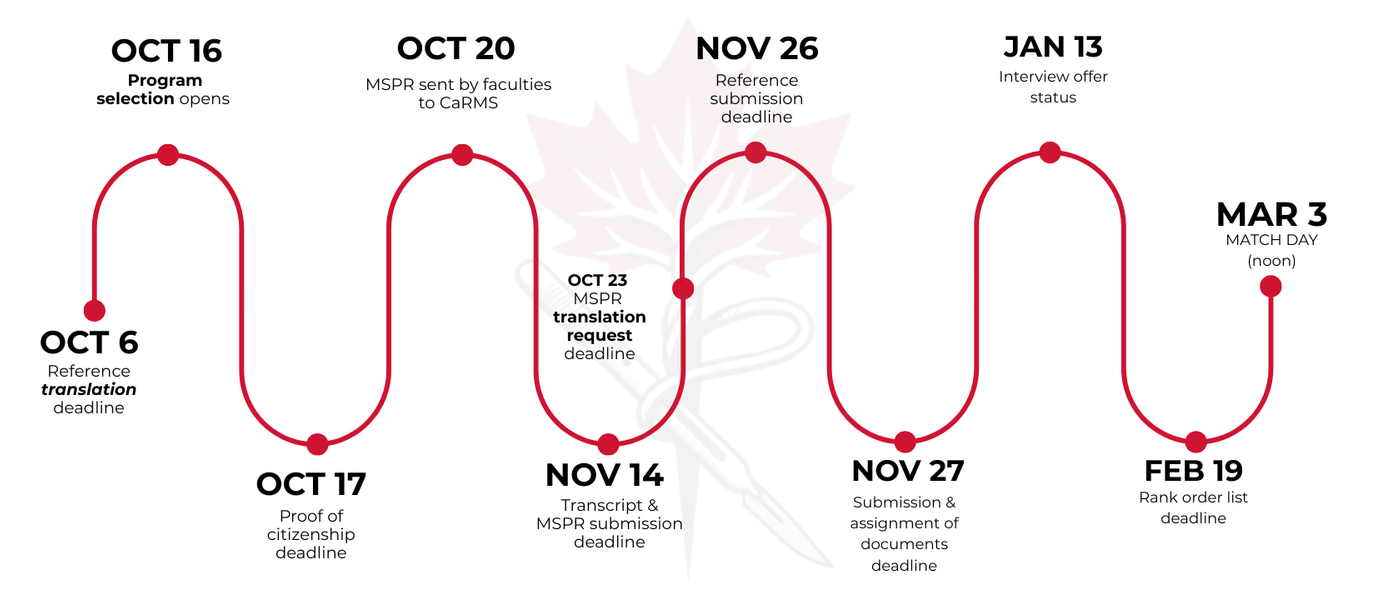
Explore COSSNET’s comprehensive CaRMS guide, which includes a detailed application timeline, practical tips and strategies, and specific requirements for each Canadian orthopaedic residency program.

Orthopaedic Residency Training

Orthopaedic residency in Canada is a 5-year Royal College-accredited program. Training includes:

  • Progressive responsibility in clinical and operative care
  • Exposure to trauma, sports, paediatrics, oncology, spine, and joints
  • Research, teaching, and leadership development

Residents graduate with broad competence across the spectrum of muskuloskeletal care.


Become a member of CORA, the national association for Canadian orthopaedic resident doctors. CORA fosters resident research and education, stages the CORA Annual Meeting, represents the interests and concerns of orthopaedic residents to the COA, and promotes improvements in the residency training programs. Plus, membership is free!


During your residency, sign up for the COA’s Basic Science Course, a virtual four-module course designed to provide participants with an outline of the basics of orthopaedics basic science, and an overview of non-neoplastic conditions, orthopaedic biomechanics, and neoplastic conditions.


Fellowship Training or Practice

After residency, many surgeons pursue fellowship training in a subspecialty such as:

  • Sports medicine
  • Arthroplasty
  • Trauma
  • Spine
  • Hand
  • Paediatrics

Others transition directly into independent practice, working in academic centres, community hospitals, or mixed settings.


Continuing Professional Growth

For surgeons already in full-time practice, continued learning remains a vital part of delivering high-quality, patient-centred care. We encourage you to explore the various orthopaedic subspecialties for focused updates across the breadth of orthopaedic practice, and to revisit our library of past webinars (or sign up for an upcoming webinar), which offer practical insights from leaders in the field.


Engagement Through the COA / CORS / CORA Annual Meeting

Attending the COA/CORS/CORA Annual Meeting is another valuable way to stay at the forefront of the subspecialty. The meeting brings together surgeons from across Canada for cutting-edge scientific sessions, hands-on learning opportunities, and meaningful professional exchange.

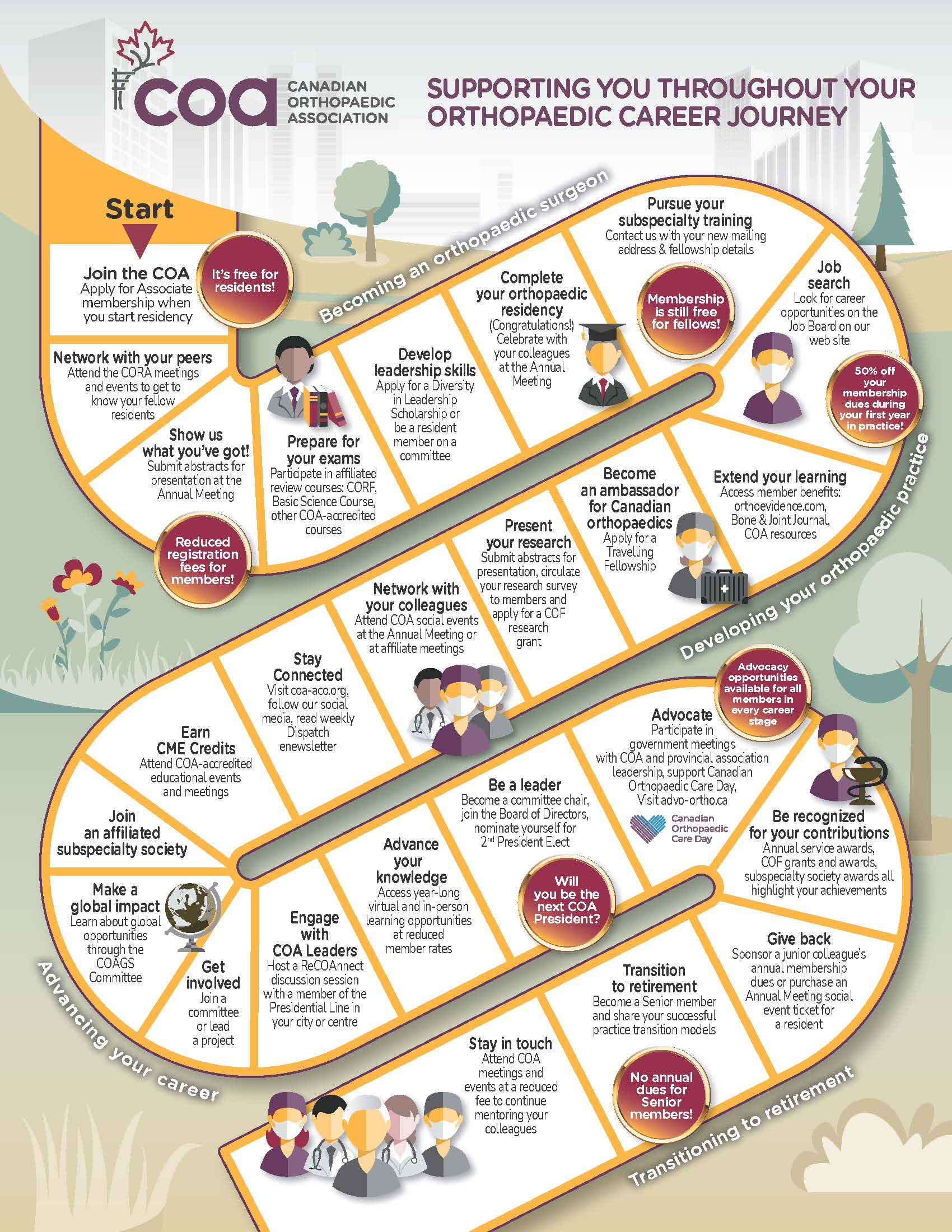
Bonus: COA Journey Map – Supporting You Throughout Your Pathway

Why Choose Orthopaedics?

Dr. Olufemi Ayeni – renowned orthopaedic surgeon, educator, and COA Past President, discusses why a career in orthopaedic surgery is worth considering.


Canadian Orthopaedic Surgery Student Network

Medical students are encouraged to engage with the Canadian Orthopaedic Surgery Student Network COSSNET, an affiliate partner organization of the COA, to learn more about the CaRMS process, as well as the various services and events offered specifically for medical students aspiring to pursue careers in orthopaedic surgery.

Let’s build your future – one bone at a time.

Visit the COSSNET Web Site Here