15th CAS Annual Meeting – Registration Open!

November 20, 21, 2026

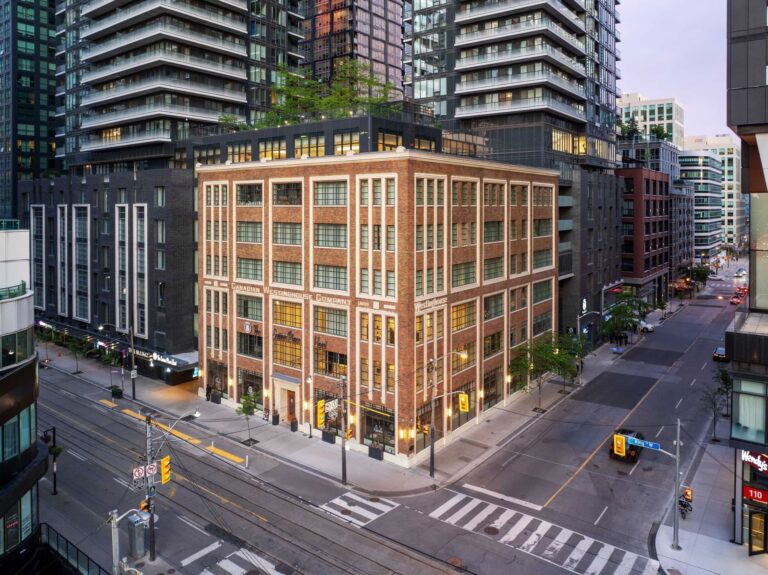
Sutton Place Hotel
355 King St W, Toronto, ON M5V 1J5

Meeting Program


Click Here for Meeting Registration


Click Here for Housing



Guest Presenters

Tristan Ferry

Professor Tristan Ferry, MD, PhD, is an infectious diseases physician and internationally recognized expert in prosthetic joint infection management at Hospices Civils de Lyon, France.

He contributed to the development of France’s national reference centre network for complex bone and joint infections (CRIOAc). He leads the PHAGEinLYON clinical program and has been involved in treating >100 patients with bacteriophage therapy, including patients with complex prosthetic joint and other bone and joint infections. Under a national mandate from the French Ministry of Health, he coordinates multidisciplinary assessments to centralize national advice on phage therapy indications.

Building on his clinical experience, he has developed several phage therapy regimens that are now being evaluated in clinical trials, including PHAGE4DAIR, a European Union-funded randomized controlled trial for S. aureus prosthetic joint infections, for which he is the Clinical Trials Medical Lead.

Presenters/Moderators

Presenter Guidelines
  • Preparing your talk
    • Bring a copy of your PowerPoint presentation (“talk”) on a USB drive. Email yourself a backup copy.
    • Aspect ratio: Screen and projector are set to present 16:9 ratio.
    • Internet connection is unlikely to be available on the presenter laptops. Avoid live links in talks.
    • Optional: An Annual Meeting PPT slide template including the CAS logo and colours is available on the CAS web site.
    • All patient identifiers must be removed from slides and images.
    • Mandatory: To be compliant with Royal College accreditation, the second slide of each talk (following the title slide) must include statement of financial disclosure (it can simply say “nothing to disclose” if that is the case). Please download the financial disclosure slide template from the CAS web site.
    • Mandatory: All presenters and speakers must complete an online disclosure form (forms will appear in green within the system if complete). Please log in to submit your disclosure if you have not already done so. Authors who do not submit disclosure information by November 16 will unfortunately be removed from the final program.
    • Speakers acknowledge that the National Standard requires that any description of therapeutic options utilize generic names (or both generic and trade names) and not reflect exclusivity and branding.
  • How long are the talks?
    • Strict adherence to time limits will be enforced
    • Podium (paper session) talks: 4-minute talk, 3-minute discussion
  • Other sessions: Length at the discretion of the moderator
  • Loading your talks
    • All talks must be uploaded with the dropbox link available here. Filename to include PRESENTER LAST NAME_TITLE and version #. If you make changes, a new version with a new version # can be uploaded.
    • If absolutely not possible to upload the file, talks must be loaded from the USB stick directly in the meeting room during the breaks between sessions or before the first session of the day. See the detailed program for break times.
    • A technician will be on site to assist you.
    • Be sure to test your presentation, paying particular attention to images, audio, and video
  • Audiovisual specs on site:
    • Windows 11
    • MS Office 360
    • Windows Media Player 12.0.19041.746
    • VLC Media Player 3.0.11 Vetinari
    • Video: Windows Media Player plays most video, but the VLC Player is more reliable and it will play every video format.
    • The audiovisual projection system will include a Personal Computer (PC). We are unable to accommodate speakers’ laptops. No Macintosh computers or adapters will be available.


Important Reminders


For inquiries, email cas@canorth.org.

Moderator Guidelines
  • Paper sessions: each paper presentation is allotted 4 minutes for speaking plus 3 minutes of discussion. Please consult the final program for the exact number of presentations and timing for your
  • For all other session types: the number of presentations and length of session varies per program. Please consult the program for information.

BEFORE THE SESSION:

  1. Familiarize yourself with all abstracts in your session – view them in the final program
  2. Familiarize yourself with the pronunciation of names and
  3. Prepare questions to stimulate discussion as needed.
  4. Bring a time-keeping device (e.g. cell phone) and keep the session on schedule. Use any reasonable means to stop a speaker who has exceeded the allotted time. The session must stay on schedule so that individuals presenting a paper, or individuals attending a specific talk, may do so at the time indicated in the In some sessions, there is significant discussion/buffer time at the end of the session so please use your discretion.

TECHNICAL ISSUES:

1.        Speakers cannot connect laptops into computer projectors in the meeting room. Speakers have been instructed to upload their presentations to the dropbox or load their presentations in advance with the AV technician in the technical booth in the session room.

  1. If any technical difficulties occur which are not the fault of the speaker, keep track of elapsed time and allow speaker his/her designated time.
  2. If a speaker is not present at the time of their talk, proceed to the next paper and move the delayed paper to the end.
  3. If you have any problems with AV or sound, please address the technician.
  4. Ask participants questions or present a related case in the case of technical/AV troubleshooting. Keep audience engaged and focused on session.

ON SESSION DAY:

Start the Session:

  1. Take your seat at the moderator’s table.
  2. Introduce yourself and state any important announcements (e.g. staff will leave a coloured sheet of paper on the podium with relevant updates when applicable).
  3. Remind presenters that they each have 4 minutes for presentation, and 3 minutes for discussion during grouped discussion blocks.
  4. Remind delegates to fill in the electronic evaluation form online to obtain CME credits.
  5. Note the paper number and name of any presenter who has not included a financial disclosure slide (see below).

The second slide of each presentation must outline financial disclosure. It is the moderator’s responsibility to note the paper and presenter name for any presentation missing a disclosure slide. E-mail the info to cas@canorth.org


Managing Conflict of Interest

How to proceed if there is a conflict of interest at the podium: If you perceive any conflict of interest at the podium which has not been appropriately disclosed, or any promotion of a product or company, please take note of the speaker’s name, talk title, and session title, and email cas@canorth.org following the session with your concerns

Moderate the Presentations:

  1. Maintain the schedule. If necessary, defer lengthy discussions to the end of the session or suggest that the discussion be continued in private, once the session has
  2. Ensure presentation times are respected:
    • At the 3-minute mark, indicate to the presenter that 1 minute remains
    • At the 4-minute mark, indicate to the presenter that their time is up
  3. Talk times should be respected. Should a talk need slightly more than 4 minutes, you may need to reduce discussion time for the block of papers or for the session overall. Please use your discretion to end the session on time.

Discussion and Response:

  1. Facilitate the question-and-answer discussion period for each block of papers and at the end of the session. The session moderators, not the speaker, conduct the discussion by recognizing participants on the floor.
  2. During discussions, ask participants to identify themselves and speak audibly.
  3. Prepare your own comments and questions based on reading the submitted abstracts.

Ending the Session:

  1. Thank speakers and participants.
  2. Remind all delegates to complete the evaluation online to obtain CME credits.
UPLOAD PRESENTATION

Please upload your Powerpoint presentation to:

https://www.dropbox.com/request/xpmiifejeosxmz68tzwd

File Name: Last Name of Presenter_title_Version #

Past Events

Personalized Arthroplasty Society 2026 Annual Meeting

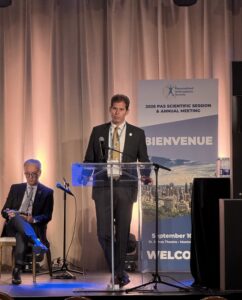
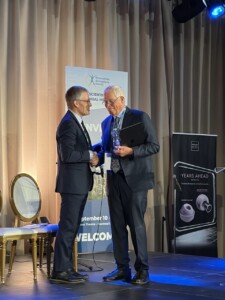
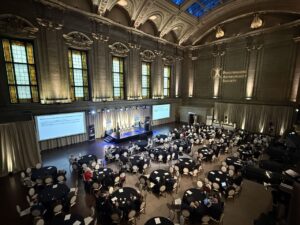
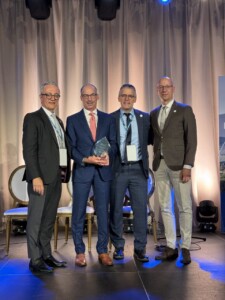
From September 10 to 12, 2026, the Personalized Arthroplasty Society (PAS) held its Annual Meeting at the St-James Theatre in Old Montréal. It was three days of frank, stimulating exchanges, all focused on a single question: how can we better care for each patient by respecting their individual anatomy, kinematics, and expectations?

SUMMARY


______________________________________________________________________________


CAS 2025 Annual Meeting

November 14-15

Sutton Place Hotel
355 King St W, Toronto, ON M5V 1J5

MEETING PROGRAM


The Canadian Arthroplasty Society (CAS) was pleased to welcome Drs. Gregory G. Polkowski and James A. Browne from the Executive Committee of the American Association of Hip and Knee Surgeons (AAHKS) to next month’s CAS Annual Meeting.

As part of the international collaboration programs offered by AAHKS, Drs. Polkowski and Browne  participated as guest speakers and delivered keynote addresses at the CAS Annual Meeting
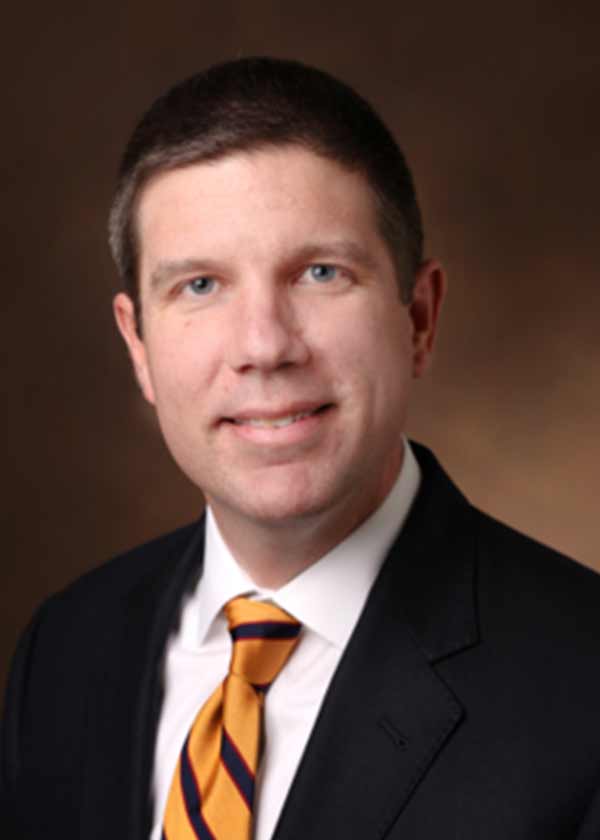
Gregory G. Polkowski II, MD, MSc
AAHKS Third Vice President
Associate Professor, Department of Orthopaedic Surgery
Division Chief, Adult Reconstruction
Vanderbilt Health
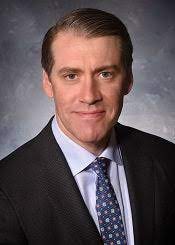
James A. Browne
AAHKS Treasurer
Alfred R. Shands Professor
Adult Reconstruction of Orthopaedic Surgery
Vice Chair Clinical Operations and Division Head Adult Reconstruction
University of Virginia School of Medicine


14th ISAR congress

February 19-21, 2025
Christchurch, New Zealand

CAS Intro to Arthroplasty Fundamentals for Residents

February 3, February 10, 2026

Residents learned the basics of complex primary and revision total hip arthroplasty in this virtual 2-part didactic and interactive course. Led by experts in lower extremity arthroplasty from across Canada, each 90-minute module covers a wide range of fundamental topics and includes case-based discussions.